Every missed call costs your HVAC business between $200 and $500 in potential revenue. When you’re losing 35% of after-hours calls—the prime time when furnaces break and AC units die—that adds up to $24,000 to $72,000 annually walking straight to your competitors.
But here’s what most HVAC owners don’t realize: the solution isn’t hiring more staff or staying glued to your phone 24/7. It’s building an automated system that captures every call, qualifies every lead, and books jobs while you sleep.
In this guide, I’ll show you exactly how to build an AI-powered answering system that transforms missed calls into booked appointments—without adding to your payroll.
## Why Traditional Solutions Fail HVAC Companies
Before diving into the fix, let’s understand why the common approaches don’t work:
**Voicemail:** Studies show 80% of callers won’t leave a voicemail. They’ll simply call the next company on Google.
**Answering Services:** Generic call centers don’t understand HVAC emergencies. They can’t distinguish between a refrigerant leak requiring immediate dispatch and a routine maintenance question.
**After-Hours Staff:** Hiring someone to answer phones from 6 PM to 8 AM gets expensive fast—$3,000+ monthly before you’ve dispatched a single technician.
The real solution combines AI automation with smart routing to handle every scenario appropriately.
## The Three-Layer AI Answering System
The most effective approach uses three layers working together:
### Layer 1: AI Voice Response
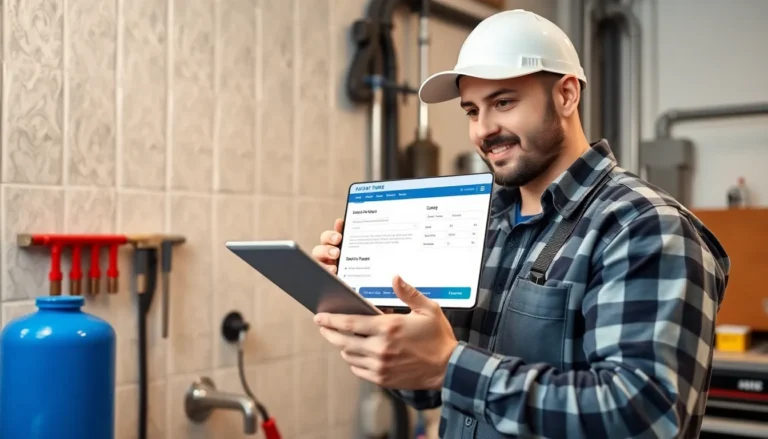
Modern AI voice systems can answer calls naturally, understand context, and make decisions. Unlike robotic IVR menus, these systems have actual conversations.
Here’s what a good AI voice system handles:
– **Emergency triage:** Recognizes keywords like “no heat,” “gas smell,” or “flooding” and routes accordingly
– **Appointment scheduling:** Accesses your calendar and books available slots
– **Basic questions:** Answers pricing, service area, and hours without human intervention
– **Lead capture:** Collects name, address, phone, and problem description
The key is training the AI on HVAC-specific scenarios. A generic AI won’t know that “my furnace is making a banging noise” might indicate a cracked heat exchanger—a potential emergency—while “it’s making a humming sound” is likely routine.
### Layer 2: Smart Lead Routing
Not every call needs the same response. Your system should route based on urgency:
**Immediate dispatch triggers:**
– Gas smell or carbon monoxide alarm
– Complete heating failure below 40°F
– Complete cooling failure above 90°F
– Water leaking from unit
– Elderly or infant in home with no climate control
**Same-day callback triggers:**
– System running but not heating/cooling effectively
– Strange noises or smells (non-gas)
– Thermostat issues
**Next-business-day triggers:**
– Maintenance requests
– Quote requests
– General questions
This routing ensures true emergencies get immediate attention while routine calls don’t wake you at 2 AM.
### Layer 3: Automated Follow-Up Sequences
Here’s where most HVAC companies leave money on the table. A caller who doesn’t book immediately isn’t a lost cause—they’re a warm lead requiring nurture.
For automated follow-up, we recommend [Moosend](https://axionis.io/Moosend) or [Brevo](https://axionis.io/Brevo) to build sequences that convert inquiries into bookings.
Your follow-up sequence should include:
**Immediate (within 5 minutes):**
Text message confirming their inquiry was received, with estimated callback time.
**30 minutes later:**
Email with helpful content—”5 Things to Check Before Calling for AC Repair”—that positions you as helpful, not pushy.
**Next morning (if no booking):**
Text offering a specific appointment slot: “Hi [Name], we have a technician available tomorrow between 9-11 AM. Reply YES to confirm.”
**Day 3:**
Email with a limited-time offer: “Still having issues with your AC? Book this week and get a free maintenance inspection ($89 value).”
This sequence typically converts 20-30% of initially non-booking callers into appointments.
## Building Your System: Step-by-Step Implementation
### Step 1: Choose Your AI Voice Platform
Several platforms now offer AI voice specifically for service businesses. When evaluating options, look for:
– HVAC-specific training capabilities
– Calendar integration (Google Calendar, ServiceTitan, Housecall Pro)
– Custom routing rules
– Real-time transcription
– SMS and email integration
Budget $100-300/month for a quality AI voice solution. Compare that to the $1,500+ you’d spend on a single missed emergency call.
### Step 2: Configure Your Emergency Protocols
Map out every possible call scenario and the appropriate response:
| Scenario | AI Action | Human Notification |
|———-|———–|——————-|
| Gas smell | Transfer to on-call tech immediately | Text + call owner |
| No heat (temp below 50°F) | Offer emergency dispatch, quote premium rate | Text owner |
| No heat (temp above 50°F) | Schedule same-day, offer morning slot | Email summary |
| AC not cooling (100°F+ day) | Offer emergency dispatch | Text owner |
| Routine maintenance | Schedule next available, offer membership | Daily summary |
| Pricing question | Provide ranges, capture info for follow-up | Weekly report |
### Step 3: Set Up Your Email Marketing Integration
Connect your AI system to [Moosend](https://axionis.io/Moosend) or [Brevo](https://axionis.io/Brevo) to automate the follow-up sequences described above.
Create these essential automation workflows:
1. **New lead nurture:** 5-email sequence for non-booking inquiries
2. **Post-service follow-up:** Request review, offer maintenance plan
3. **Seasonal reminders:** AC tune-up in spring, furnace check in fall
4. **Dormant customer reactivation:** Haven’t heard from them in 12+ months
The email sequences alone typically generate 15-25% additional revenue from your existing lead flow.
### Step 4: Implement SMS for Immediate Response
Text messages have a 98% open rate versus 20% for email. Use SMS for:
– Instant confirmation when someone calls
– Appointment reminders (reduces no-shows by 30%+)
– “On our way” notifications
– Quick follow-up questions
Both [Moosend](https://axionis.io/Moosend) and [Brevo](https://axionis.io/Brevo) offer SMS capabilities alongside email, letting you manage both from one platform.
### Step 5: Track Everything
You can’t improve what you don’t measure. At minimum, track:
– Total calls received (by hour and day)
– Calls answered vs. missed
– Conversion rate (calls to bookings)
– Average response time
– Revenue per lead source
– Follow-up sequence performance
Review these metrics weekly and adjust your system accordingly.
## Real Numbers: What to Expect
Let’s run the math on a typical HVAC company doing $800K annually:
**Before AI Answering System:**
– 100 after-hours calls/month
– 35 missed (35%)
– Average job value: $400
– Lost revenue: 35 × $400 = $14,000/month ($168K/year)
**After AI Answering System:**
– 100 after-hours calls/month
– 5 missed (5%—technical issues, dropped calls)
– 30 additional captured calls
– 60% conversion rate on captured calls
– Recovered revenue: 30 × 0.6 × $400 = $7,200/month ($86K/year)
**Investment:**
– AI voice platform: $200/month
– Email/SMS automation: $50/month
– Setup and training: $500 one-time
**ROI: $86,400 recovered annually on $3,500 first-year investment = 2,369% return**
Even if your numbers are half this, you’re still looking at a 10x+ return.
## Common Mistakes to Avoid
**1. Making the AI too robotic**
Modern callers expect natural conversation. Invest time in crafting conversational scripts, not corporate-speak.
**2. Not training on your specific scenarios**
Generic AI will miss HVAC nuances. Feed it real call recordings (with permission) to learn your customer language.
**3. Forgetting the human escalation path**
AI handles 80% of calls, but humans must handle the rest. Always provide a clear path to reach a real person.
**4. Ignoring the data**
Your AI system generates valuable data. Use it to identify patterns—maybe Monday evenings have high call volume, or maybe certain zip codes convert better.
**5. Setting and forgetting**
Review and refine monthly. Customer language evolves, new issues emerge, and your system should adapt.
## Getting Started Today
You don’t need to build everything at once. Start with these three actions this week:
1. **Audit your current missed calls.** Check your phone records for the past month. How many calls went to voicemail? How many voicemails were left?
2. **Set up basic SMS auto-response.** Even a simple “Thanks for calling [Company]. We’ll call you back within 30 minutes” dramatically reduces hangups.
3. **Create your first email sequence.** Use [Brevo](https://axionis.io/Brevo) (free tier available) to build a 3-email nurture sequence for leads that don’t book immediately.
## Take It Further: The Complete HVAC AI System
If you want the full system—AI voice scripts, email templates, SMS sequences, tracking spreadsheets, and vendor recommendations—all packaged and ready to implement, check out the [HVAC AI Answering System](https://axionis.io/products/hvac-ai-answering).
It includes:
– Complete AI voice configuration guide
– 15 pre-written email templates for every scenario
– SMS scripts that convert
– Integration tutorials for popular HVAC software
– ROI calculator to track your results
Stop losing $50K+ to missed calls. Build the system that captures every opportunity, even while you sleep.
—
*Have questions about implementing AI for your HVAC business? Drop a comment below or reach out directly.*
🔧 Stop Losing After-Hours Calls
Get the free HVAC After-Hours Recovery Kit — scripts, setup guides, and ROI calculator included.
Or check out the complete Domination System ($47)